Monday, September 24, 2012


The Allstate Foundation

Grantmaking Focus Areas

Since 1952, we have invested more than $275 million in funding in communities across the country to address key social issues. Our grantmaking priorities fall into three categories: Safe and Vital Communities, Economic Empowerment and Tolerance, Inclusion and Diversity.

Safe and Vital Communities

The Allstate Foundation is dedicated to fostering safe and vital communities where people live, work and raise families. We strive to foster communities that are economically strong, crime-free, and give residents a sense of belonging and commitment. Our Safe and Vital Communities funding priorities are:
  • Teen Safe Driving: Helping to save young lives and instill a lifetime of safe driving attitudes and behaviors. Learn more about the Allstate Foundation's Teen Safe Driving signature program.
  • Catastrophe response: Rebuilding lives after a natural disaster strikes.
  • Neighborhood revitalization: Nurturing safe, strong, and healthy communities.

Economic Empowerment

The Foundation is committed to empowering Americans with the economic resources and knowledge they need to make informed decisions about their financial future. Our Economic Empowerment funding priorities are:
  • Domestic Violence : Helping survivors live free and stay free from violence by building their financial security. Learn more about The Allstate Foundation's Domestic Violence signature program.
  • Financial and economic literacy: Building a more secure financial future for Americans.

Tolerance, Inclusion, and Diversity

We believe that in order for a community to be strong, it has to recognize and value all of its members. That's why we are committed to programs that bring tolerance, inclusion, and value to people of all backgrounds regardless of ethnicity, sexual orientation, gender, age or physical challenges. Our Tolerance, Inclusion, and Diversity funding priorities are:
  • Teaching tolerance to youth: Fostering a generation free of bias and intolerance.
  • Alleviating discrimination: Encouraging communities to be free of prejudice.

Monday, September 17, 2012

 
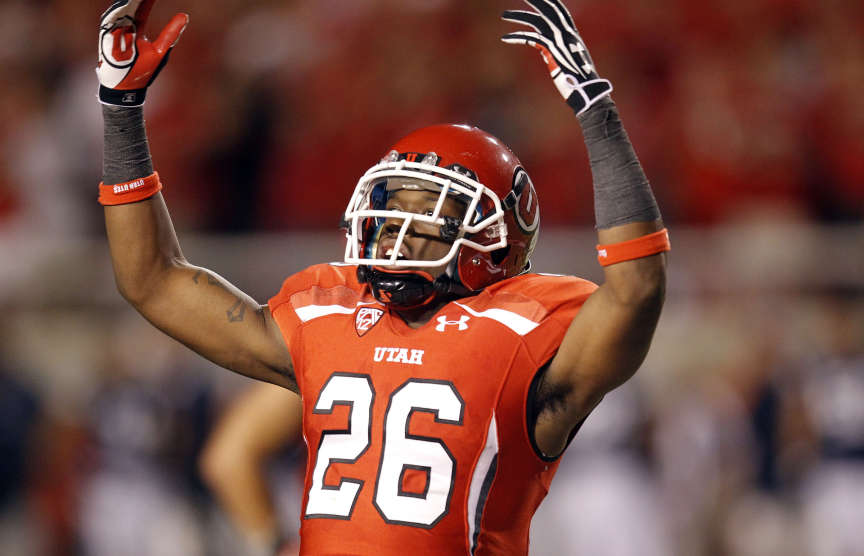
What if BYU's field goal went through the uprights?
lacy.jpg
 
 
SALT LAKE CITY — The University of Utah and BYU are familiar to dramatic endings, particularly with a field goal deciding the end of the game. Just two years ago, the Utes salvaged a win after Brandon Burton blocked a BYU field goal. And Saturday's game was no different, ending in dramatic fashion. Leading by 17 points going into the fourth quarter, the Utes allowed the Cougars to cut the lead to three points with just under four minutes left in the game. After stalling on offense, due in large part to the Cougars defense, Utah was forced to punt the ball with just more than a minute left in the game.   BYU senior quarterback Riley Nelson had impossible odds against him, down three, facing a 92-yard drive and no timeouts. After slowly moving the ball up field and taking a lot of time off the clock, Nelson faced a fourth-and-12 situation and the game on the line. Nelson found an open receiver Cody Hoffman for a 47-yard gain and good field position to tie the game.   The situation was reminiscent of the 2007 game where BYU quarterback Max Hall found receiver Austin Collie on fourth-and-18, which led to BYU defeating the Utes 17-10. However, a pass by Nelson was later deflected by the Utes, and the game appeared to be over. After the chaos of Utah fans rushing the field, the refs declared one second left in regulation, giving the Cougars one shot at a field goal attempt. The 51-yard field goal attempt was blocked, but was called back because fans prematurely rushed the field, giving the Cougars an extra 15 yards to work with.
It could have gone to overtime, but I've got a policy that I never complain about the refs. It's a fruitless, pointless way to operate. I just don't do that.
–Kyle Whittingham
 
"I guess the clock thing: okay. The blocked kick: in all my experience in football, that would have been a no-call," Utah head coach Kyle Whittingham said. "But then we lined up and did it again." With another "miracle" game hanging in the balance, BYU switched up placekickers, going with Riley Stephenson for a 36-yard field goal attempt. The kick, however, hit the left upright, ending the Cougars' many attempts. "The end result was what we wanted, but a little bit of drama at the end there," Whittingham added. But what would have happened if either field goal attempt went in? The obvious answer is a tie game, but who has the momentum going into overtime? Would Utah fall short in overtime two weeks in a row? "
Will the BYU-Utah game be the turning point for either team?
1. Yes, for BYU
2. Yes, for Utah
3. Yes, for both teams
4. No, it's just one game
5. Undecided
While the answer is speculative at best, Utah would have likely felt most of the pressure. After squandering a 17-point lead, the emotion of the game could have been the deciding factor in overtime.
"It really was an emotional swing after we thought we won the game the first time, and then putting the one second back on the clock," Utah corner Moe Lee said. "We just had to continue and fight through." While it's pointless to rehash the what-ifs of a game, both teams fought hard for a much-needed victory. As a No. 25-ranked BYU, the Cougars need every win possible for a chance to advance to a BCS bowl game at the end of the season. Utah needed a win after losing to in-state rival Utah State to help gain momentum as the team transitions to the Pac-12 schedule. "Riding high after a big rivalry win, you definitely have got to take momentum in there with us to Arizona State," Utah quarterback Jon Hays said. "That's what we've got to do." A made field goal from BYU could have been the deciding factor for both teams as the season progresses. While it's hard to put stock into a single game, momentum is a major key to the success of a team's season. BYU faces a difficult turn around, traveling to Boise State next Thursday, while the Utes begin their difficult Pac-12 schedule Saturday.

Monday, September 10, 2012

Autumn foliage may damage your vehicle

Cars that fall victim to autumn foliage may become rusty if not properly maintained.
The fall season is many Americans' favorite time of year, as the leaves changing colors and falling makes for a beautiful scene in many areas of the country. But some drivers may not be aware that the accumulation of fallen leaves on their vehicles can lead to costly problems down the road.

To begin, leaves can cause damage to the exterior of your car if left in place for a long period of time. Paint damage and rust are commonly caused by accumulated leaves that have not been cleared off, according to the Washington Post. The acid in leaves, combined with dampness or rain in the air and sunlight can cause the shape and feature of leaves to burn into your car, which eventually results in paint damage, the Post reports. This type of paint damage is permanent.

In addition to paint damage, leaves that become trapped in the openings or crevices of your vehicle may absorb water over time, which causes them to attach to the metal of your car, the newspaper explains. As this buildup becomes more solid and combines with other bits of dirt and grime, rust may develop in your vehicle.

In more serious cases, leaf build-up may clog different drains in your vehicle, such as the heating or air conditioning units. Leaves can get sucked into these drains while you're driving and eventually develop into a thick sludge that becomes a plug in your drains, the Post reports.

Proper auto care

Leaf damage is not a topic many drivers think about frequently until it has caused damage to their cars. But keeping your vehicle free from debris is as important as other auto maintenance issues, such as changing your oils and checking your tire pressure.

During months when leaf accumulation is at its highest, make sure to hose off your vehicle habitually to wash away debris. You can also prevent damage to your car by keeping it covered or parked in a garage when you're not driving it. Lastly, when your car is covered with leaves after a rainy day, wipe them off immediately to avoid stains. Remember to pull them up delicately rather than brushing them off, the latter of which may scratch your paint.

Friday, September 7, 2012

Greatest Gift


Jim Bix was a newlywed when he was diagnosed with an incurable lung disease. While his health remained stable for two decades, his condition finally began to deteriorate, leaving him unable to work. With a wife and two daughters, Jim and his family relied on disability insurance he had through work to help pay for their daily living expenses, as well as the added medical bills. When Jim died, it was his life insurance coverage through work that allowed his wife to pay off debts, keep their girls in private school and remain in the family’s home.

His health remained stable for two decades, so he was dismayed when his condition finally began to deteriorate. Now dependent on an oxygen tank to breathe, Jim was no longer able to work as an electronics technician at Honeywell. Fortunately, he had disability insurance through work, which helped the Bixes pay for day-to-day living expenses as well as the added medical bills.

Just as Jim’s condition turned critical, his wife, Clara, learned that she needed surgery to remove a cancerous kidney tumor. The operation was a success and Jim literally sang with joy, relieved that his children would still have their mother. The songs were short-lived. Jim died three weeks later.

It was the life insurance that Jim had through work that allowed Clara and the girls to carry on financially after his death. Jim had an employer-paid life insurance benefit and each year he paid extra to double the coverage amount. The life insurance proceeds allowed Clara to pay off debts, keep the girls in private school and remain in the family’s home.

Brittany, now 21, was so moved by the far-reaching power that life insurance had on her family, that she is pursuing a college degree in insurance and has become a licensed agent. “Life insurance was the greatest gift my dad could give us,” says Brittany. “It has allowed us to live life the same way as when he was here with us.”