Monday, September 17, 2012

 
What if BYU's field goal went through the uprights?
lacy.jpg
 
 
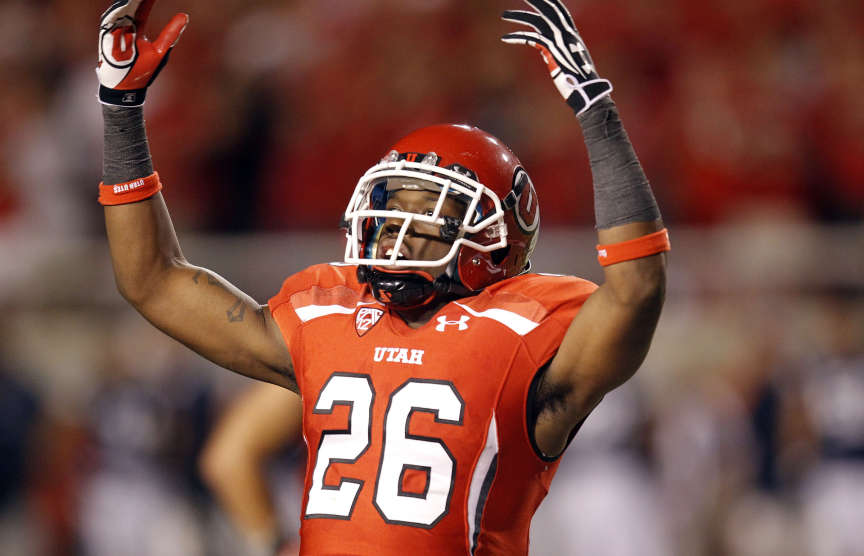
SALT LAKE CITY — The University of Utah and BYU are familiar to dramatic endings, particularly with a field goal deciding the end of the game. Just two years ago, the Utes salvaged a win after Brandon Burton blocked a BYU field goal. And Saturday's game was no different, ending in dramatic fashion. Leading by 17 points going into the fourth quarter, the Utes allowed the Cougars to cut the lead to three points with just under four minutes left in the game. After stalling on offense, due in large part to the Cougars defense, Utah was forced to punt the ball with just more than a minute left in the game.   BYU senior quarterback Riley Nelson had impossible odds against him, down three, facing a 92-yard drive and no timeouts. After slowly moving the ball up field and taking a lot of time off the clock, Nelson faced a fourth-and-12 situation and the game on the line. Nelson found an open receiver Cody Hoffman for a 47-yard gain and good field position to tie the game.   The situation was reminiscent of the 2007 game where BYU quarterback Max Hall found receiver Austin Collie on fourth-and-18, which led to BYU defeating the Utes 17-10. However, a pass by Nelson was later deflected by the Utes, and the game appeared to be over. After the chaos of Utah fans rushing the field, the refs declared one second left in regulation, giving the Cougars one shot at a field goal attempt. The 51-yard field goal attempt was blocked, but was called back because fans prematurely rushed the field, giving the Cougars an extra 15 yards to work with.
It could have gone to overtime, but I've got a policy that I never complain about the refs. It's a fruitless, pointless way to operate. I just don't do that.
–Kyle Whittingham
 
"I guess the clock thing: okay. The blocked kick: in all my experience in football, that would have been a no-call," Utah head coach Kyle Whittingham said. "But then we lined up and did it again." With another "miracle" game hanging in the balance, BYU switched up placekickers, going with Riley Stephenson for a 36-yard field goal attempt. The kick, however, hit the left upright, ending the Cougars' many attempts. "The end result was what we wanted, but a little bit of drama at the end there," Whittingham added. But what would have happened if either field goal attempt went in? The obvious answer is a tie game, but who has the momentum going into overtime? Would Utah fall short in overtime two weeks in a row? "
Will the BYU-Utah game be the turning point for either team?
1. Yes, for BYU
2. Yes, for Utah
3. Yes, for both teams
4. No, it's just one game
5. Undecided
While the answer is speculative at best, Utah would have likely felt most of the pressure. After squandering a 17-point lead, the emotion of the game could have been the deciding factor in overtime.
"It really was an emotional swing after we thought we won the game the first time, and then putting the one second back on the clock," Utah corner Moe Lee said. "We just had to continue and fight through." While it's pointless to rehash the what-ifs of a game, both teams fought hard for a much-needed victory. As a No. 25-ranked BYU, the Cougars need every win possible for a chance to advance to a BCS bowl game at the end of the season. Utah needed a win after losing to in-state rival Utah State to help gain momentum as the team transitions to the Pac-12 schedule. "Riding high after a big rivalry win, you definitely have got to take momentum in there with us to Arizona State," Utah quarterback Jon Hays said. "That's what we've got to do." A made field goal from BYU could have been the deciding factor for both teams as the season progresses. While it's hard to put stock into a single game, momentum is a major key to the success of a team's season. BYU faces a difficult turn around, traveling to Boise State next Thursday, while the Utes begin their difficult Pac-12 schedule Saturday.

Monday, September 10, 2012

Autumn foliage may damage your vehicle

Cars that fall victim to autumn foliage may become rusty if not properly maintained.
The fall season is many Americans' favorite time of year, as the leaves changing colors and falling makes for a beautiful scene in many areas of the country. But some drivers may not be aware that the accumulation of fallen leaves on their vehicles can lead to costly problems down the road.

To begin, leaves can cause damage to the exterior of your car if left in place for a long period of time. Paint damage and rust are commonly caused by accumulated leaves that have not been cleared off, according to the Washington Post. The acid in leaves, combined with dampness or rain in the air and sunlight can cause the shape and feature of leaves to burn into your car, which eventually results in paint damage, the Post reports. This type of paint damage is permanent.

In addition to paint damage, leaves that become trapped in the openings or crevices of your vehicle may absorb water over time, which causes them to attach to the metal of your car, the newspaper explains. As this buildup becomes more solid and combines with other bits of dirt and grime, rust may develop in your vehicle.

In more serious cases, leaf build-up may clog different drains in your vehicle, such as the heating or air conditioning units. Leaves can get sucked into these drains while you're driving and eventually develop into a thick sludge that becomes a plug in your drains, the Post reports.

Proper auto care

Leaf damage is not a topic many drivers think about frequently until it has caused damage to their cars. But keeping your vehicle free from debris is as important as other auto maintenance issues, such as changing your oils and checking your tire pressure.

During months when leaf accumulation is at its highest, make sure to hose off your vehicle habitually to wash away debris. You can also prevent damage to your car by keeping it covered or parked in a garage when you're not driving it. Lastly, when your car is covered with leaves after a rainy day, wipe them off immediately to avoid stains. Remember to pull them up delicately rather than brushing them off, the latter of which may scratch your paint.

Friday, September 7, 2012

Greatest Gift


Jim Bix was a newlywed when he was diagnosed with an incurable lung disease. While his health remained stable for two decades, his condition finally began to deteriorate, leaving him unable to work. With a wife and two daughters, Jim and his family relied on disability insurance he had through work to help pay for their daily living expenses, as well as the added medical bills. When Jim died, it was his life insurance coverage through work that allowed his wife to pay off debts, keep their girls in private school and remain in the family’s home.

His health remained stable for two decades, so he was dismayed when his condition finally began to deteriorate. Now dependent on an oxygen tank to breathe, Jim was no longer able to work as an electronics technician at Honeywell. Fortunately, he had disability insurance through work, which helped the Bixes pay for day-to-day living expenses as well as the added medical bills.

Just as Jim’s condition turned critical, his wife, Clara, learned that she needed surgery to remove a cancerous kidney tumor. The operation was a success and Jim literally sang with joy, relieved that his children would still have their mother. The songs were short-lived. Jim died three weeks later.

It was the life insurance that Jim had through work that allowed Clara and the girls to carry on financially after his death. Jim had an employer-paid life insurance benefit and each year he paid extra to double the coverage amount. The life insurance proceeds allowed Clara to pay off debts, keep the girls in private school and remain in the family’s home.

Brittany, now 21, was so moved by the far-reaching power that life insurance had on her family, that she is pursuing a college degree in insurance and has become a licensed agent. “Life insurance was the greatest gift my dad could give us,” says Brittany. “It has allowed us to live life the same way as when he was here with us.”

Monday, August 27, 2012


Children on Bicycles

Rules of the Road: Kids and Bicycle Safety

Post Type »
Bike riding is an annual rite of passage for kids in my neighborhood. For a 10-year-old, biking to a friend’s house or the park means summertime freedom. Unfortunately, a fun bike ride can also result in serious injury or even death if bike safety rules are ignored. Each year, 350,000 children under the age of 15 end up in hospital emergency rooms due to biking accidents. Follow these bicycle safety tips to help keep your kids safe on the road:
  1. Always wear a helmet. This should go without saying – for both children and adults – but statistics show that more than half of all bike riders don’t wear a helmet every time they ride. Even worse, 40 percent of bike riders report that they don’t own a helmet. According to Emergency Medical Services Authority, more than 60 percent of childhood bike fatalities happen on neighborhood streets less than a single mile from home. Bruises and broken bones heal. A brain injury, however, can cause permanent damage and even death. Make bike helmets a regular bike safety habit for the whole family.
  1. Wear a helmet that fits. Just like hats, helmets are available in a variety of sizes, styles and colors. Let your child pick out her favorite helmet so she’ll be excited to wear it while riding. Check for the perfect fit: Helmets should sit low on the forehead, approximately one to two finger widths above the eyebrows. The same finger rule applies to the chinstrap. The strap should be snug but not too tight, with one to two fingers fitting between the chin and the strap. Test the fit: Open your mouth wide to yawn and confirm that your helmet pulls down on your head. If it stays put, tighten the strap. According to NHTSA, a properly fitted helmet can reduce the risk of head and brain injury by up to 88 percent.
  1. See and be seen. While you don’t need to cover your child in head-to-toe reflective material, wearing bright or fluorescent clothing does make it easier for drivers to spot children. Be sure that your child’s bike has a white front reflector and a red rear reflector, along with reflectors on the tires. Children should never ride at night without a reflective safety vest.
  1. Know the rules of the road. Sadly, many bikers die each year because they ignore basic traffic rules. Teach your child that a bike is a vehicle and your child is the driver – he must obey all traffic signs, including stop signs and red lights. Bikers must look before turning left or right and indicate the turn’s direction by signaling with an extended arm. Ride in a predictable straight line and never weave in or out of traffic. If your neighborhood has a bike lane, always ride in this lane. Finally, always ride with the flow of traffic rather than against it.
What bicycle safety tips do you teach your children?

Monday, August 20, 2012

Wildfire-Fireman-iStock

Wildfire Prevention: Preparing Your Home


Wildfire can damage homes in a variety of ways. Fortunately, there are precautions you can take and building materials you can use to help mitigate the damage.

Let’s face it: We love the mountains and we love the woods. Each year, more people move deeper into America’s wild places, carving out spaces for their dream homes amid scenes of breathtaking natural beauty. In the process, they’re unwittingly creating something else: an expansion in the wildland-urban interface.
The biggest problem with WUI expansion is that it interferes with the natural cycle of wildfires, which keeps our forested areas healthy in the long term. Instead, we have an unnatural and dangerous buildup of old vegetation. This can fuel catastrophic, uncontrollable wildfires that threaten property and lives.
Fires can damage a home three ways: through radiated heat, firebrands (burning materials that can be carried up to a mile by convection forces and/or wind) and the convection column itself. When we talk about wildfire mitigation, we’re referring to steps you can take around your home and on your property that may help prevent or reduce damage from any or all of the three.
Whether you’re building a new house or planning to retrofit your existing one, there are many things you can keep in mind to mitigate wildfire damage.

Use Fire-Resistant Materials

Incorporate fire-resistant building materials wherever possible. This means using metal, tile or asphalt  composite shingles for the roofing and nonflammable exterior wall materials such as stucco, brick, plaster, cement or concrete masonry. A cautionary note about aluminum and vinyl siding: Although they are not technically flammable materials, they can lose their integrity at high heat.
Many people aren’t aware that radiated heat can ignite combustible materials from more than 100 feet away. Replace single- and even dual-pane windows and skylights with dual- or multi-pane, tempered-glass versions (especially large windows and sliding-glass doors that face the wildland). Add screens as an extra buffer.
Additionally, if you have a wood fence attached to your home, replace it with a noncombustible version such as metal, concrete or stone — and keep it free of climbing vines, weeds and other vegetation.

Check for Gaps

If your siding is combustible or not fire rated, make sure there are no spaces for embers to accumulate. Add caulk to all trim-to-siding locations where it has failed or is missing, and establish up to 5 feet of defensible, noncombustible space around your home.
After the roof, the eaves, soffits, windows and vents are the weakest links in the event of a fire. Consider open-eave framing or a soffited-eave design… and constructing those eaves and soffits with noncombustible materials. Again, avoid materials that will melt, such as vinyl or PVC.
Add metal mesh screens to all vents — such as attic, subfloor, foundation and dryer — to keep sparks out. Consider screening all decks and porches, as well. You’ll also want to weather-seal the perimeter of your garage doors, protecting any flammable materials stored inside.

Check Your Grading

Make sure your decks and porches extend over a flat grade. A fire can move upslope many times faster than on level ground. If you must have a deck that extends over a slope, use noncombustible decking such as Trex. Also, consider building a noncombustible wall across the slope approximately 15 to 20 feet from your deck.
Make sure your chimney extends above the roofline, and have a chimney spark arrestor, also known as a chimney guard or chimney screen, in place. These steps will help ensure that you don’t cause the next wildfire by accidentally igniting your roof or nearby trees and vegetation, particularly when dry conditions have made them vulnerable.

Keep Up on Regular Home Maintenance

Keep your roof, gutters and vents clear of debris; firebrands can quickly ignite dried-out organic matter and spread to vulnerable areas such as vents, eaves and your roof. Have working smoke detectors and fire extinguishers on every floor of your home. Know how to use the extinguishers.

Ensure Your Access to Water

Can you maintain your water supply with uninterrupted electricity? Consider purchasing a generator to operate your pump in the event of a power failure, and make sure you have a connected, functioning garden hose.
Many folks who live in the WUI accept that wildfire risk is the price they pay for living in such beautiful places. They also try to do everything they can to mitigate that risk, for themselves and for the sakes of the firefighters who might have to defend their homes one day. There are no guarantees that these measures will save your home in the event of a large wildfire, but they may improve your chances of minimizing the damage.

Monday, August 13, 2012

Bumper-Stickers

Stuck On You: America’s Bumper Sticker Obsession

Post Type »
You’ve been down this road before. You’re rolling through rush hour at a snail’s pace. To pass the time, you start assessing the other cars around you and you are suddenly faced with knowing whose kids are on the honor roll, whose kids are going to beat up the honor roll kids and every religious and political persuasion with whom you happen to be sharing the road . Not to mention what people want you to brake for and honk at.
Those ubiquitous bumper stickers paint quite an entertaining landscape. Everything from the official to the downright bizarre are deemed important enough to be plastered onto our cars. Literally. Some make you laugh and some make you cringe, but hey, it’sAmerica, we’re all about freedom of expression. And nothing illustrates this better than the bumper sticker.

Bumper Sticker Fun Facts

  1. The first bumper stickers appeared shortly before World War II. They were flag-like, and attached to the bumper by wires. Word has it, someone named Forest P. Gill replaced the wire attachments with pressure sensitive adhesive, and as a result bumper stickers became more widespread and practical.
  2. Advertising bumper stickers began with “See Rock City” signs, touting a tourist attraction atopLookout Mountain,Tennessee. In the 1940s, visitors to the site had a sticker applied to their car, which duplicated the famous signs painted on the roofs of barns throughout the southeastern USA. Rock City staff would circulate through the parking lot, applying the promotional sticker to every car. Although called “stickers,” these bumper signs were actually lightweight, screen-printed cardboard. They were attached with thin aluminum strips, running through the end of the sign and wrapping around the bumper.
  3. In Israel, one of the most popular songs of all time is Shirat Hasticker (“The Sticker Song”) by Hadag Nachash, a song composed entirely of bumper sticker slogans.
  4. In 2009, the Guinness Book of World Records certified that Bill T. Heermann of Lincoln, Nebraska had the Largest Collection of Bumper Stickers. Since 1984, Heermann had collected over 4,131 bumper stickers.
  5. If you want to look like the ultimate bumper sticker collector, Zazzle.com offers the most expensive bumper sticker in the world. At $355 the sticker states “This is the MOST EXPENSIVE Bumper Sticker In The WORLD.” Discounts are given, however, for buying in bulk.

Monday, August 6, 2012

Buying a Home

5 Things to Know About a Neighborhood Before You Buy a Home

Post Type » ,
You just bought the cutest house in the quietest neighborhood — or so you thought. Unfortunately, you did your house hunting in the winter, and now that the weather has warmed up you’re realizing the street is populated with teenagers who blast music through open windows and dozens of kids who routinely race their bikes through your yard.
In the National Association of Realtors’ 2010 Profile of Home Buyers and Sellers, buyers ranked quality of neighborhood (64 percent) as the most important consideration when selecting a place to live.
While it may not be possible to know everything there is to know about your neighborhood before you move in, a thorough investigation will help ensure you are moving into the right environment.
Be sure your research includes these important criteria:

Crime rates

Visit crimereports.com, a website that provides visitors with free up-to-the-minute crime maps and crime reports for specific areas. The site offers a free mobile download and, if you choose, will send free crime alerts on a regular basis.
Also, make time to talk to the community resource officer for the area. Your city may have a different title for this position, but it’s essentially someone who works as a liaison between the police and neighborhoods.
Your community officer can provide information about property and violent crime trends for an area and may even be able to provide crime report printouts. For small communities, you may need to check directly with the police department.

National Sex Offender Database

The police will be able to provide information about registered sex offenders living nearby. You should also check out FamilyWatchdog.us, a free database that allows you to search by street name or city. The site provides information — often including a photograph —about offenders living in the neighborhood.

Noise and traffic

Your home search may not span months, so that you can learn about summertime vs. wintertime noise. But you should plan to visit the neighborhood at all times of the day and night. Check out traffic patterns during rush hour. Are some streets more dangerous because of this traffic? What’s the neighborhood like at midnight on a Saturday? Is there a church nearby that eats up all the Sunday morning parking? Are you so close to the airport that you hear the roar of planes?
Talk to multiple neighbors: Does the neighboring park host festivals that might create parking and noise issues? Ask when they think the neighborhood is at its wildest and, if at all possible, make a visit at that time.

Schools

You don’t have children, so why should neighborhood schools matter? Two main reasons: You may have children in the future, and good schools ensure consistent demand for properties — and higher resale prices. Websites such as Education.com and GreatSchools.net allow you to search schools by ZIP code, city, district or school name.
These sites provide information about test scores, student-to-teacher ratios, student demographics and more. Because private schools aren’t required to release test scores, the sites provide fewer statistics about them. Ask neighbors for their thoughts on area schools and conduct Internet searches for articles and reviews about them.

Public services

When you drive through a potential neighborhood, do you see signs that the city is having financial trouble? Are streets clean and well maintained? Are parks clean? Are there sidewalks? Is public transportation available nearby? Where are the nearest police and fire stations? Have libraries been shuttered? Declining property tax rolls have forced many towns to cut back on public services. Are you comfortable with the level of services available in this neighborhood?
An outdated kitchen or bath can always be remodeled, but neighborhoods are more difficult to change. Do your homework so you end up buying a home in a location that’s right for you and your family.

Mary Boone is a writer for Zillow, a home and real estate marketplace dedicated to helping homeowners, buyers, sellers, renters, real estate agents, mortgage professionals, landlords and property managers find and share vital information about homes, real estate and mortgages.